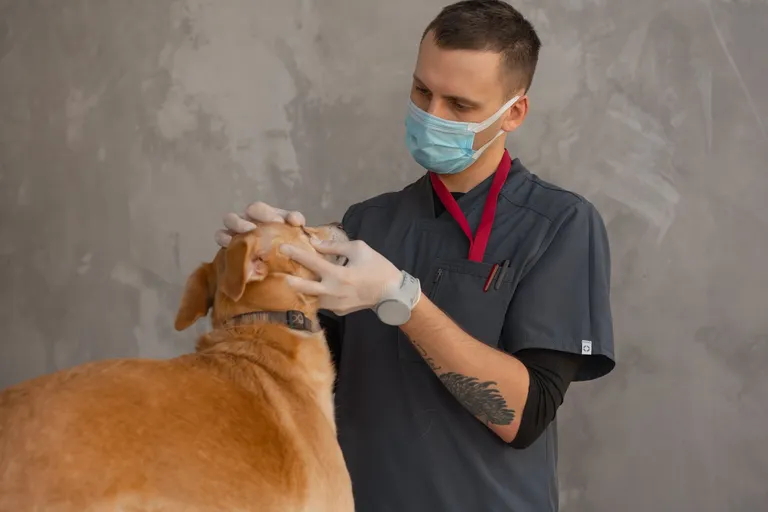
A dog that used to leap onto the couch without hesitation suddenly stalls at the bottom of the stairs, sniffing the first step twice before deciding whether it's worth the trouble. Owners often chalk it up to age or a lazy day. More often, it's neither — it's discomfort the dog has no way to describe.
That kind of subtle hesitation is often the first sign owners notice, and it's one of the reasons veterinary chiropractic care has grown into a legitimate option for pets dealing with discomfort, not just a novelty reserved for elite animal athletes.
How Do I Know If My Pet Is Uncomfortable?
Animals are remarkably good at hiding pain — a survival instinct left over from being prey animals, or from a pack mentality where showing weakness carries a cost. That means the signs are usually subtle: reluctance to jump onto furniture or into the car, hesitation on stairs, a shortened stride, favoring one side, or simply seeming less interested in a walk that used to be the highlight of the day. None of these are dramatic on their own, which is exactly why they get missed.
What Actually Causes These Misalignments?
Just like people, animals can develop misalignments in the spine and joints that create pain, stiffness, and reduced mobility over time. Injury is one obvious cause — a fall, a collision, an awkward landing during play. Overuse from repetitive activity is another, particularly in dogs that run, jump, or work regularly. Age-related wear adds up gradually, the same way it does in people, and even posture habits — favoring one leg, an ill-fitting harness, sleeping in the same awkward position night after night — can contribute over time. Breed also plays a role: long-backed dogs and larger breeds tend to carry more structural stress on their spines than smaller, more compact ones.
Is Chiropractic Care Only for Competition Animals?
Working and competitive animals — police dogs, farm dogs, agility and show competitors — do benefit noticeably, since their bodies are asked to perform at a high level repeatedly. But the same principles apply to any active pet that hikes, runs, or swims regularly, and arguably matter even more for senior pets trying to hold onto their independence and comfort as their bodies age. It's a pattern that shows up often among the active, outdoorsy pets around Fitchburg and Madison — dogs that hike local trails, swim in area lakes, and handle cold winters right alongside their owners. A dog doesn't need to be competing in anything to benefit from moving more comfortably.
What Does an Adjustment Actually Look Like?
It's nothing like what most people picture from human chiropractic care. Adjustments for animals use gentle, low-force techniques suited to a much smaller and more varied range of anatomy than a human spine — a technique appropriate for a Great Dane looks nothing like one appropriate for a cat or a miniature horse. Most animals tolerate the process well and some visibly relax into it once they realize nothing painful is happening; a good practitioner reads the animal's body language throughout and adjusts their approach accordingly, since a stressed or resistant animal isn't a good candidate for that particular session.
Who Should Actually Be Doing This?
This is the part that matters most: animal chiropractic care should only be performed by a licensed veterinarian who has completed specialized training in the technique — not a human chiropractor working outside their scope, and not anyone without that specific credential. The anatomy, communication, and handling involved in treating animals safely is genuinely different from human care, and it takes dedicated training to do well.
What This Means for a Pet's Day-to-Day Life
For the dog that stalls at the bottom of the stairs, or the aging cat that's stopped jumping onto the windowsill, addressing the discomfort behind those small changes can mean the difference between a pet that's merely getting older and one that's still genuinely comfortable in its own body. Owners who catch these signals early, and get them evaluated by someone qualified to treat them, tend to see their pets stay active and engaged well into their senior years. It's a small shift in attention — noticing the hesitation instead of explaining it away — that ends up making the biggest difference over the course of a pet's life.
About the Author
Dr. Madison Reiber, DC
Licensed chiropractor serving Fitchburg and Madison, WI. Specializing in ProAdjuster360, Flexion/Distraction, and Graston Myofascial Release.
Book an Appointment