A 13-year-old catches her reflection in a fitting-room mirror and notices something odd: one shoulder sits noticeably higher than the other, and her shirt hangs unevenly at the hip. It's often a moment like this — not a diagnosis, not a screening, just an unexpected reflection — that first raises the question of scoliosis.
What Scoliosis Actually Is
Scoliosis is an abnormal sideways curvature of the spine, often forming a shape closer to an "S" or a "C" than the spine's normal straight line viewed from behind. It typically shows up in childhood or the early teenage years and ranges from barely noticeable to significant enough to affect comfort and daily movement. Uneven shoulders or hips, a shoulder blade that sticks out more than the other, an asymmetrical waist, or a tendency to lean to one side are the visible signs; back pain and muscle fatigue often come along with the curve, especially as it progresses. Most cases are idiopathic — there's no clear single cause — which makes regular screening during growth years one of the more reliable ways to catch it before it has a chance to progress further.
How Scoliosis Is Usually Caught
A simple forward-bend test — checking whether one side of the rib cage or lower back rises higher than the other as a person bends forward — is still one of the most common ways scoliosis gets noticed first, whether at a school screening, a pediatrician's visit, or a chiropractic evaluation. If that test raises a concern, an X-ray confirms the diagnosis and measures the degree of the curve, which is what actually determines whether bracing, monitoring, or a more active treatment approach makes sense. Scoliosis isn't only a childhood condition, either — some adults develop new curves later in life as the spine's discs and joints degenerate unevenly, or discover a mild curve they'd never noticed once back pain finally brings them in for an evaluation.
Living With It
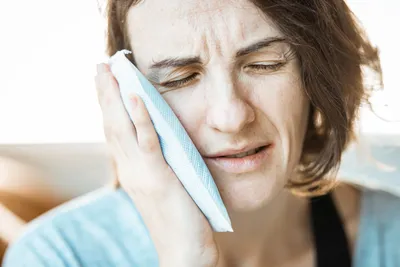
For a teenager, the physical curve is often the smaller part of the problem. Uneven shoulders show up in class photos. Clothes fit strangely. Some kids get self-conscious about swimming or gym class. The muscle fatigue and low-grade back pain that come with an asymmetrical spine can make sitting through a school day exhausting in a way that's hard to explain to people who don't deal with it. That combination of physical discomfort and self-consciousness is often what finally brings a family in for an evaluation, more than the curve itself.
Where Chiropractic Fits Into Treatment
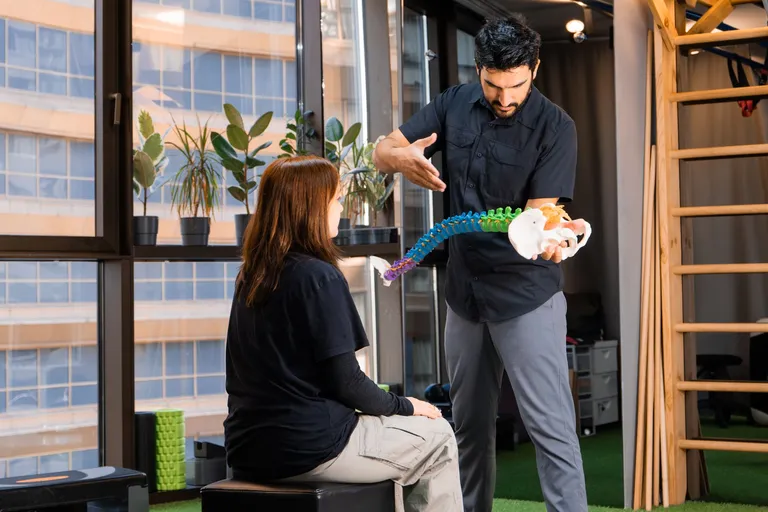
Traditional treatment for moderate-to-severe scoliosis ranges from bracing to surgery — both legitimate options for the right situation, but neither is something a family takes on lightly. Chiropractic care offers a lower-intervention option that can stand on its own for milder curves or work alongside bracing for more significant ones. We see families around Fitchburg and Madison whose kids fall into that milder category, where gentle, curve-specific adjustments aim to reduce the discomfort that comes from the muscle imbalances a scoliotic spine creates, while postural exercises build strength in the muscles working overtime to compensate. Soft tissue therapy addresses the tight, overworked muscles on the curve's concave side, and simple changes — like side-sleeping with a pillow between the knees — can ease morning stiffness.
What to Watch For
Uneven shoulders or hips, a visibly asymmetrical waist, one shoulder blade more prominent than the other, or persistent back pain in a child or teenager are all reasons to have a spine evaluated. None of those signs mean surgery is inevitable — they mean it's worth understanding what's happening before deciding what, if anything, needs to change.
If a curve has already been diagnosed, or a screening turned up something worth a second look, it's worth reading more about how a chiropractic spinal evaluation works and how it can complement whatever care is already part of the plan.
About the Author
Dr. Madison Reiber, DC
Licensed chiropractor serving Fitchburg and Madison, WI. Specializing in ProAdjuster360, Flexion/Distraction, and Graston Myofascial Release.
Book an Appointment