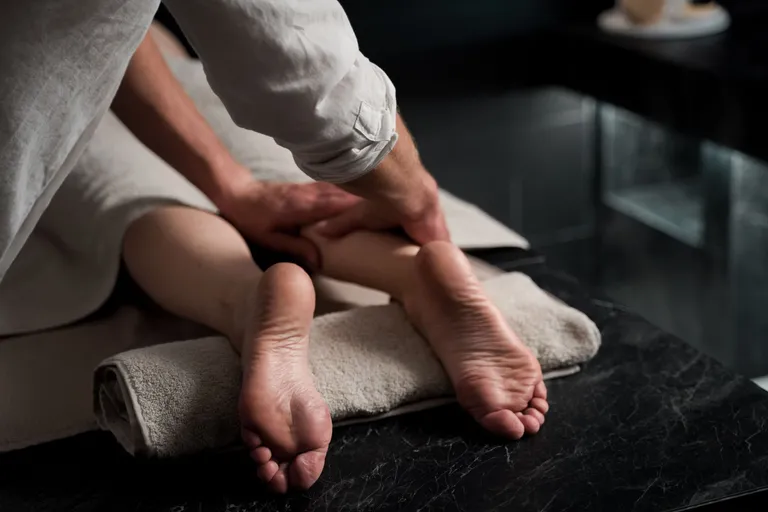
Wisconsin mornings don't make anything easier, and if you already deal with plantar fasciitis, the first cold steps out of bed each winter can feel like stepping on glass. That sharp pain in the heel — worst with your very first steps of the day, easing up once you're moving — is the calling card of one of the most common causes of heel pain, affecting an estimated two million Americans a year.
What's Actually Happening with Plantar Fasciitis
Plantar fasciitis is inflammation of the plantar fascia, the thick band of connective tissue running from your heel to your toes along the bottom of your foot. Overnight, that tissue tightens up. The first time you put weight on it in the morning, it stretches painfully before it loosens — which is exactly why the pain is worst right when you get out of bed, then fades as you walk it out, only to return after long periods on your feet.
A Morning Routine That Actually Helps
- Before your feet touch the floor, sit on the edge of the bed and gently flex your foot up and down 10 times on each side. This pre-stretches the fascia before it bears weight.
- Roll your foot over a frozen water bottle or massage ball for a minute or two — cold plus pressure calms inflammation and loosens the tissue at the same time.
- Stretch your calves, not just your feet. Tight calf and Achilles muscles pull on the heel and make the fascia work harder than it should.
- Choose supportive footwear the moment you're up — going barefoot on hard floors, especially cold ones, undoes the stretching you just did.
Where Chiropractic Care Comes In
Foot pain rarely starts and stays in the foot. Chiropractic care looks at plantar fasciitis as part of a chain — spinal and pelvic alignment affects the mechanics of how weight travels down through the hips, knees, and ankles into the foot. Adjustments to the foot and ankle joints themselves can also improve how the joint moves, taking some of the repetitive strain off the fascia. Soft tissue work targets the fascia and calf muscles directly, and a biomechanical assessment can catch contributing factors like a weak core or an old postural habit that's been quietly loading one side of the body more than the other.
Plantar fasciitis responds well to consistency more than any single fix. If those cold Wisconsin mornings have you dreading the first steps out of bed, why keep pushing through it alone? Come in to Revive Chiropractic so we can look at what's actually driving the strain and build a plan around it.
About the Author
Dr. Madison Reiber, DC
Licensed chiropractor serving Fitchburg and Madison, WI. Specializing in ProAdjuster360, Flexion/Distraction, and Graston Myofascial Release.
Book an Appointment