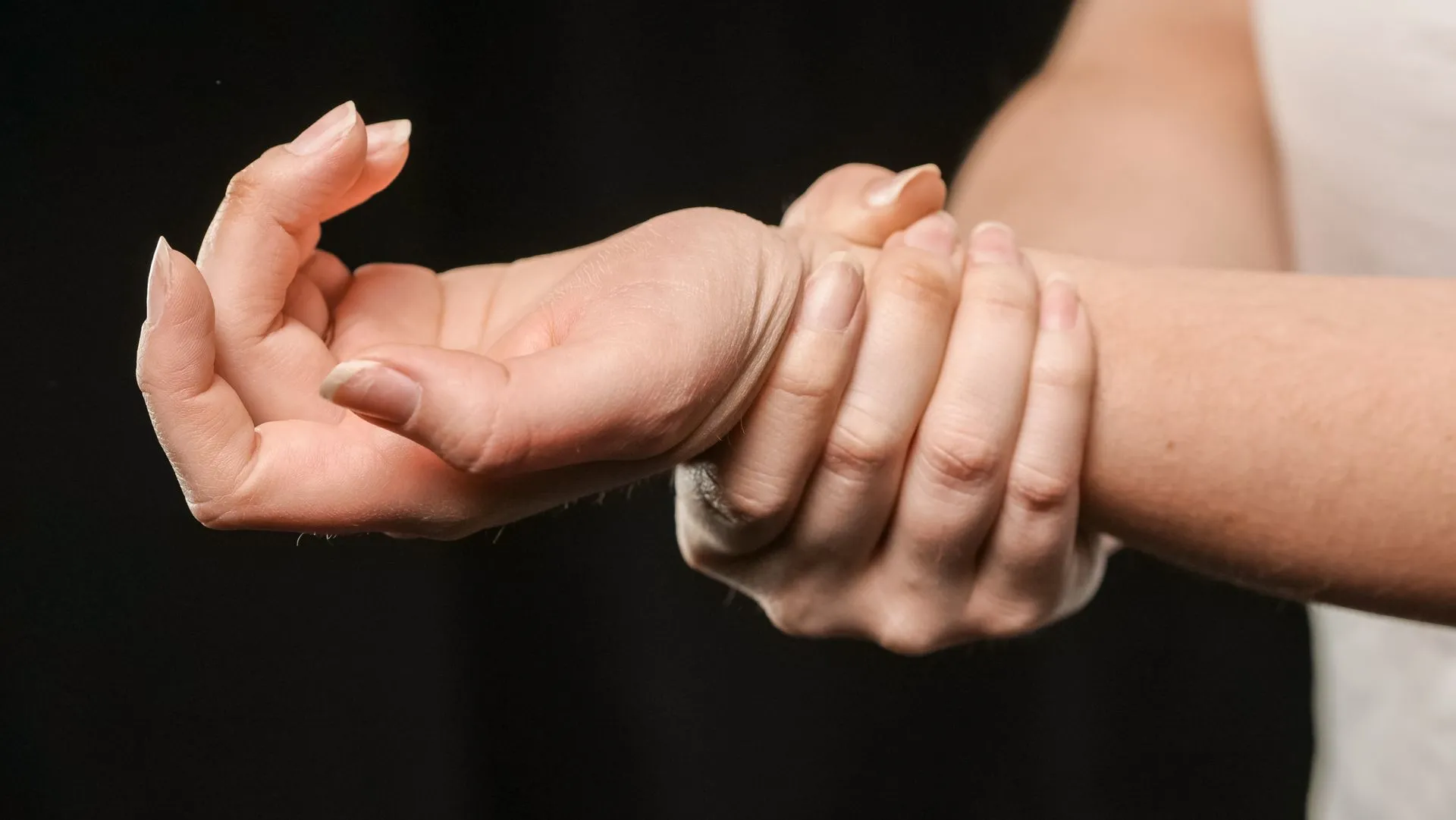
Ever had a finger get stuck in a bent position, then suddenly pop straight with a click that makes you wince? That's the classic sign of trigger finger — medically known as stenosing tenosynovitis, a narrowing of the sheath that the tendon running to that finger slides through. Picture a rope sliding smoothly through a loop of the right size; now picture that loop swelling slightly, so the rope catches and jerks with every pass instead of gliding through. That's roughly what's happening inside an inflamed tendon sheath, and it's why the finger locks and then snaps rather than moving smoothly.
Recognizing Trigger Finger
Trigger finger usually starts small: stiffness in the finger, especially first thing in the morning, followed by popping or clicking sensations when bending it. A tender, pea-sized nodule often develops at the base of the affected finger — the thickened, irritated portion of the tendon sheath. As it progresses, the finger can lock in a bent position entirely, or catch partway through movement before suddenly springing straight.
Who's Most Likely to Get It
It's a pattern that shows up often in Fitchburg patients. Repetitive gripping — factory work, tool use, even hours of scrolling on a phone — raises the risk, as do diabetes and rheumatoid arthritis, both linked to meaningfully higher rates. It's also more common between ages 40 and 60, and more common in women than men. Musicians, gardeners, and anyone whose job involves gripping a tool or steering wheel for hours at a stretch also show up disproportionately, simply because the tendon gets far more repetitive load than it's built to handle without recovery time in between.
Steps That Actually Help
1. Start With Ice and Rest
Ice the affected finger for 10 to 15 minutes, several times a day, to calm the inflammation inside the sheath. Cutting back on the specific gripping activity that seems to aggravate it — even temporarily — gives the irritated tissue a chance to settle.
2. Get the Joint Moving Correctly
Gentle hand and wrist adjustments aim to restore normal joint mechanics in a hand that's been compensating for a stuck finger. Soft tissue therapy targets the irritated tendon sheath directly, working to reduce the friction that's driving the catching and locking.
3. Rebuild Mobility With Specific Exercises
Once the acute irritation has calmed down, targeted stretching and gliding exercises for the tendon help restore full, smooth range of motion rather than just reducing pain in the moment.
4. Address What's Driving It
A single treatment rarely solves trigger finger for good if the underlying repetitive strain is still happening at the same rate. That might mean ergonomic changes at a workstation, a brief splint to keep the finger in a neutral position while it heals, or simply switching which hand does the gripping-heavy task at work. Even small adjustments, like switching to a larger-grip tool handle or taking short breaks every hour, add up over weeks and months.
When to Get It Looked At
Trigger finger tends to respond well to catching it early, before repeated locking episodes cause more irritation in the sheath. Waiting it out rarely makes the catching go away on its own, and the longer it locks repeatedly, the more irritated the tissue becomes. For cases that don't improve with conservative care, a corticosteroid injection or, occasionally, a minor surgical release of the tendon sheath are the next steps a physician might consider — but most mild-to-moderate cases never need to get there if the underlying strain gets addressed early.
If a finger has started catching or locking regularly, it's worth reading more about how hand and wrist care fits into a broader approach to joint health — it's a pattern we see often in patients around the Madison area who spend their days gripping tools, keyboards, or steering wheels.
About the Author
Dr. Madison Reiber, DC
Licensed chiropractor serving Fitchburg and Madison, WI. Specializing in ProAdjuster360, Flexion/Distraction, and Graston Myofascial Release.
Book an Appointment