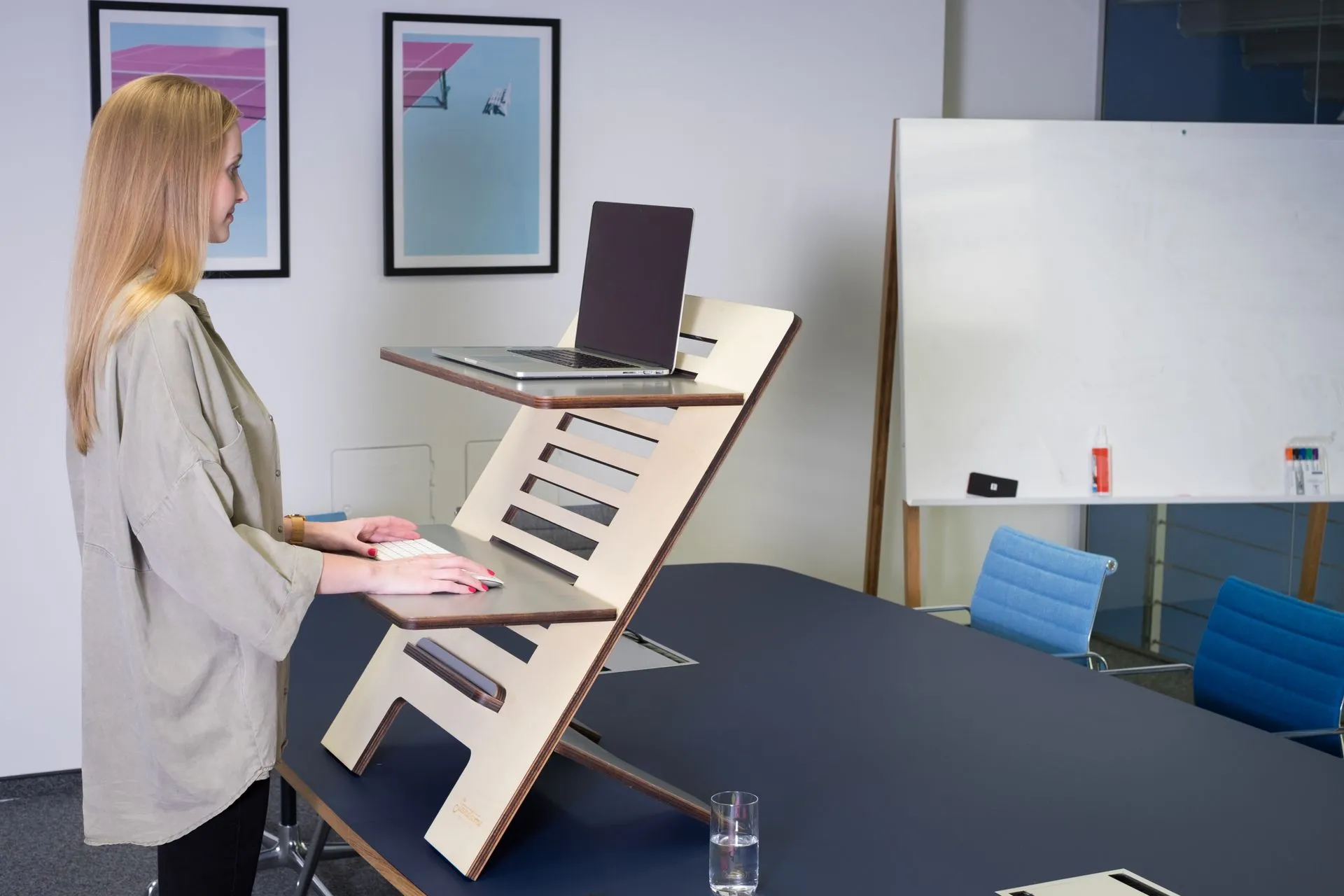
Sitting for more than seven hours a day is linked to measurably higher rates of obesity, reduced insulin sensitivity, and cardiovascular strain — and regular exercise doesn't fully cancel it out. That's the surprising part: you can hit the gym every morning and still carry the risks of a sedentary workday if you're at a desk the other nine hours. It's part of why some researchers have started calling prolonged sitting "the new smoking."
Standing desks aren't a cure-all, but used correctly, they address a real chunk of that risk. Here's how to actually set one up and use it well.
Set Up Your Standing Position First
Before worrying about timing, get the posture right, since a poorly set-up standing desk creates new problems instead of solving old ones. Stand with feet hip-width apart and knees slightly soft, never locked. Engage your core lightly to support your spine rather than letting your lower back sag forward. Set your screen at eye level so you're not tipping your head down or craning it up, and keep your keyboard at a height that lets your elbows rest near 90 degrees.
Time It Right
Standing all day isn't actually the goal — fatigue from an all-day stand can be just as hard on your body as an all-day sit. A reasonable stretch is 30 minutes to an hour at a time, giving your spine, core, and legs a real break before switching back to sitting.

Build the Habit Gradually
If you're new to standing desks, don't jump straight to standing all day.
- Start with 30-minute stretches, a couple of times a day, and build from there.
- Alternate deliberately between sitting, standing, and moving rather than defaulting to one position.
- Take short movement breaks every hour or so, even a lap around the office.
What You'll Likely Notice
Beyond the physical side, better posture and more movement tend to bring a real bump in focus and afternoon energy — a lot of the "3 p.m. slump" is really just hours of stillness catching up with you.
If your workstation has been contributing to back or neck pain, book a visit at Revive Chiropractic in Fitchburg and we'll help you sort out whether the desk setup, your posture, or something structural is actually driving it.
About the Author
Dr. Madison Reiber, DC
Licensed chiropractor serving Fitchburg and Madison, WI. Specializing in ProAdjuster360, Flexion/Distraction, and Graston Myofascial Release.
Book an Appointment